NORYVA
TB-500
What the body sends to the spot when it repairs.
10 mg
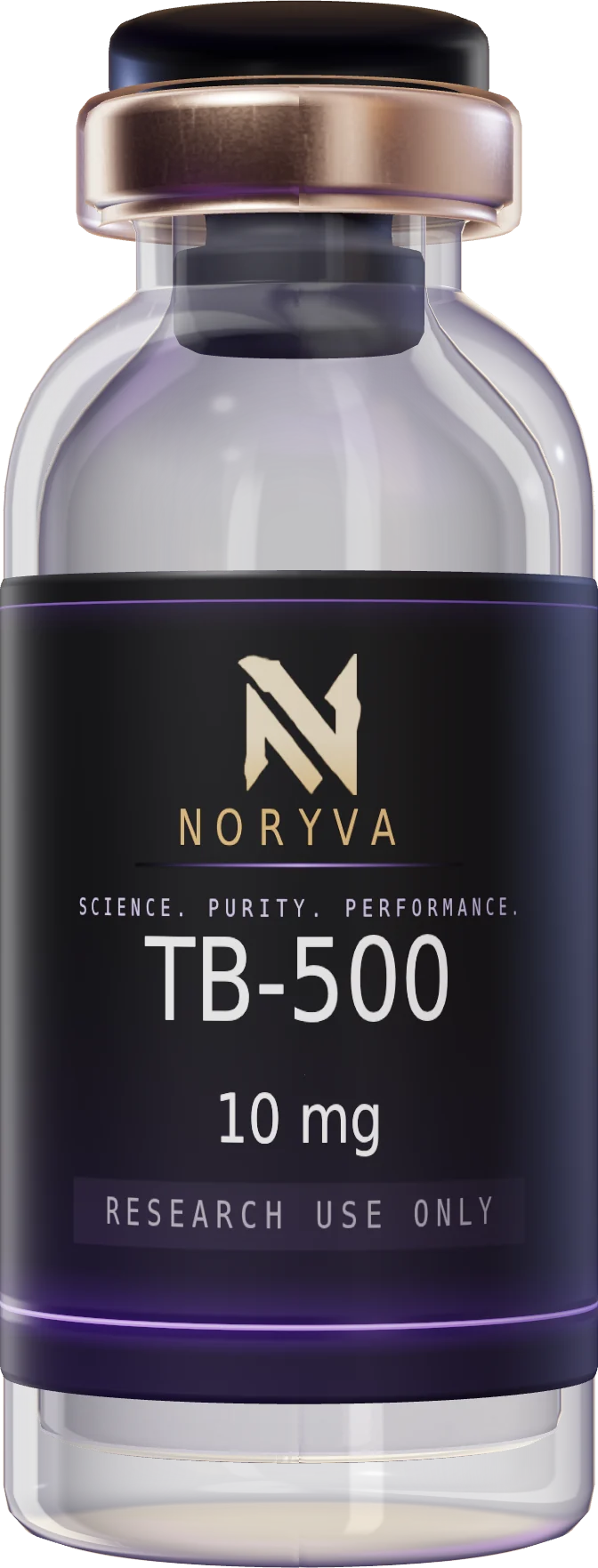
TB-500 reproduces the piece considered active in a protein the body already makes. That protein comes into play when cells have to travel to an area being repaired — and it is this precise function that is studied.
- Tissue repair — laboratory and animal work.
- The movement of cells towards the damaged area.
- A fragment, not the whole protein — that is its limit.
What is being looked at?
- Tissue repair
- Recovery
- Cell movement
The essentials
- Format
- 10 mg
- Storage · Batch number · Manufactured · Expiry · Batch purity
- On the batch certificate
- Evidence level
- Preclinical
- Use
- For research and laboratory use only.
The question you are asking yourself
How is this different from BPC-157?
Both are studied around repair, but not at the same point of the problem: BPC-157 is observed on the healing of widely different tissues, this one on the movement of cells toward the area. And it carries a limit of its own: the whole protein has been studied in humans, this fragment has not.
Why this reference?
When a tissue repairs itself, cells have to travel to the place that needs repairing. A protein of the body takes part in that travel; this reference takes up the piece of it considered active. Everything documented is documented in the laboratory and in animals — the whole protein has been studied in humans, but a fragment is not the molecule it comes from.
What you should know
Scientific detail
What it is
TB-500 is a synthetic fragment corresponding to an active region of thymosin beta-4, a naturally occurring protein involved in cytoskeletal organisation.
Why it is studied
Thymosin beta-4 binds actin and plays a role in cell migration. That function makes it a subject of study for tissue repair processes.
Described mechanism
Proposed mechanism: actin binding, effect on cell migration and on blood vessel formation. The fragment is not the whole protein, and nothing guarantees it reproduces all of its effects.
What the research has studied
- Tissue repair
- Cell movement
- Heart and cornea models
Human data
Clinical work has been conducted on thymosin beta-4 itself in specific indications. It does not transfer to TB-500: a fragment is not the molecule it came from, and a result in one indication does not hold for another.
Preclinical data
Animal data on tissue repair, principally.
What the data does not say
Frequent conflation of TB-500 with thymosin beta-4 in commercial presentations. Absence of human data on the fragment itself. Effects on blood vessel formation are studied in both directions, including for their risks.
Regulatory status
For laboratory research purposes only. Not for human consumption or therapeutic use.
This reference holds no marketing authorisation as a medicinal product.
Customer reviews
Frequently asked questions
Can I order TB-500 today?
No. This reference is not offered for sale: its commercial framework is not settled. No purchase button is shown until it is.
Does TB-500 hold a marketing authorisation?
No. This reference holds no marketing authorisation as a medicinal product and is approved by no authority for human use. A publication or a clinical trial never amounts to approval.
What analyses are available?
The certificate of analysis is supplied with the batch delivered. No batch number or purity figure is published until the real certificate has been entered: we do not display illustrative values.
How is this reference stored?
The storage requirement is not yet on file: the supplier data sheet has not reached us. We would rather say so than assume.
Is it compatible with the NORYVA injector pen?
Compatibility is not confirmed for this reference. Until the manufacturer confirms it, we do not claim it.
What does the available data actually show?
Frequent conflation of TB-500 with thymosin beta-4 in commercial presentations. Absence of human data on the fragment itself. Effects on blood vessel formation are studied in both directions, including for their risks.
Work out a volume
The vial amount is prefilled from this page. The solvent volume and the amount aimed for are yours to enter: NORYVA proposes neither.